Your guide to buying a robot vacuum cleaner in Singapore
When it comes to housework, it’s all about working smart, not working hard.
You guessed it – we're talking about robot vacuum cleaners!
Robot vacuum cleaners are a must-have for homeowners these days.
You’re probably busy juggling your 9-5, while trying to find the time to exercise, while taking care of your family, while trying to have a social life.
If you can outsource some of your housework to a robot vacuum cleaner, that helps, right?
In this article, we’ll discuss all you need to know about robot vacuum cleaners, and tell you how to choose the best robot vacuum for you.
In this article:
PS: You can also purchase robot vacuums from Singtel and pay in 12, 24 or 36 month instalments:
Is it worth buying a robot vacuum cleaner?
The advantages of a robot vacuum are obvious, but let’s also talk about some potential pitfalls to have a balanced point of view.
We’ve done the research and looked at what everyone is saying online, and the TLDR is that robot vacuums may be less suitable for people with pets, and anyone with babies or old folks living with them.
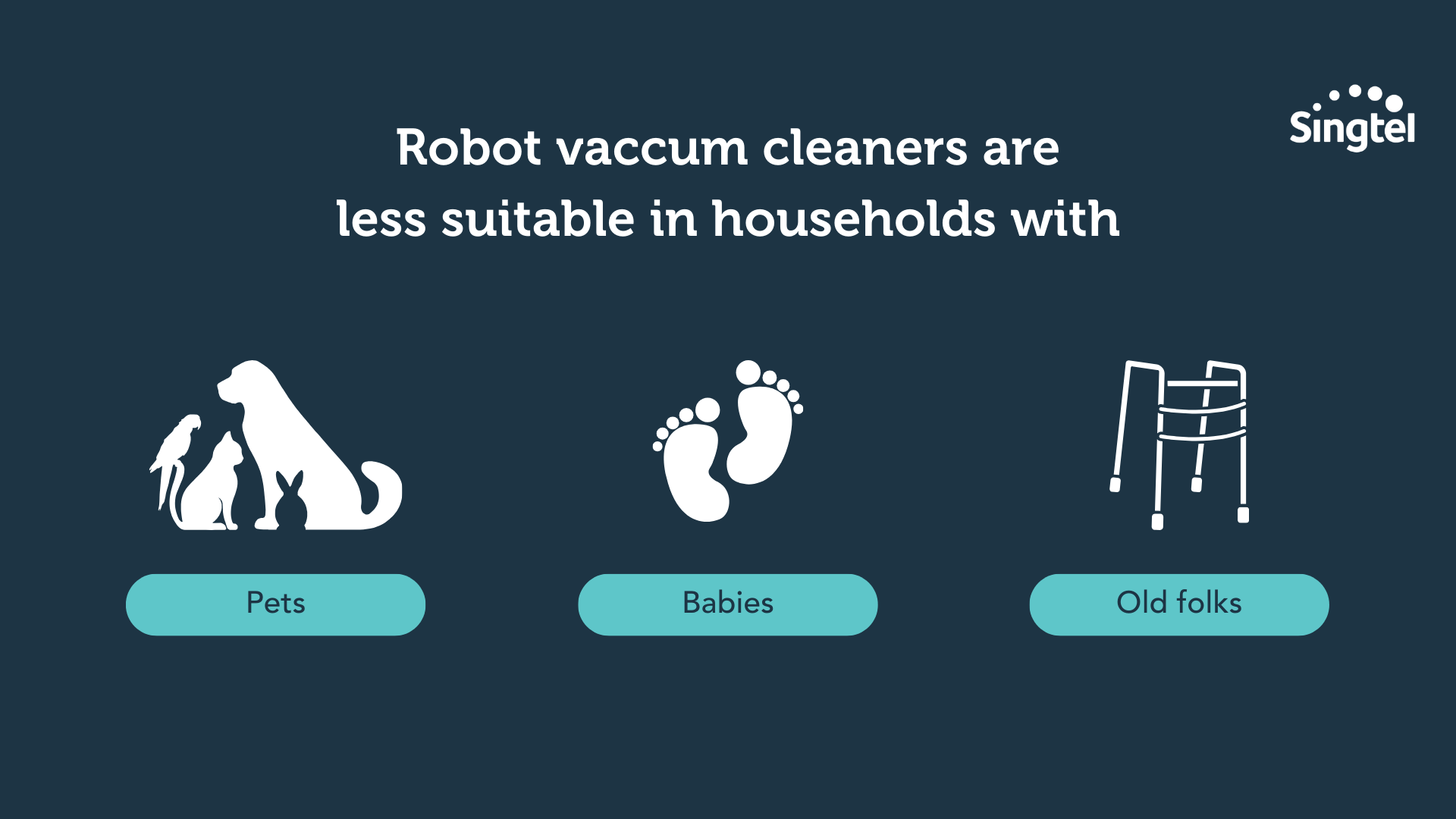
Firstly, you may want to use a robot vacuum with caution if you have pets (especially pets that aren’t house-trained) at home.
You probably know where this is going... if your pet accidentally defecates indoors and you don’t clean it up before your robot vacuum gets to it, the robot vacuum will spread it across your entire home.
If you have a baby at home, your robot vacuum may also scare your baby and/or wake them up with its loud noise. The same goes for toddlers – robot vacuums and toddlers don’t exactly go hand-in-hand.
Finally, old folks who are unfamiliar with robot vacuums may also not be comfortable with having these at home.
We’ve heard of cases where someone’s grandparents panicked when a robot vacuum was advancing towards them, resulting in them tripping and falling.
Of course, these are pretty niche cases, and the majority of households will still benefit from a vacuum cleaner.
Do you need a robot vacuum cleaner and a normal vacuum?
Now that we’ve discussed the pros and cons of a robot vacuum, the next question is... if you buy a robot vacuum, do you still need a normal vacuum?
In most cases, the answer is yes.
For most folks, robot vacuums and vacuum cleaners aren’t interchangeable.
People typically use their robot vacuum for daily general cleaning, and do a deeper clean with a normal vacuum once a week or so.
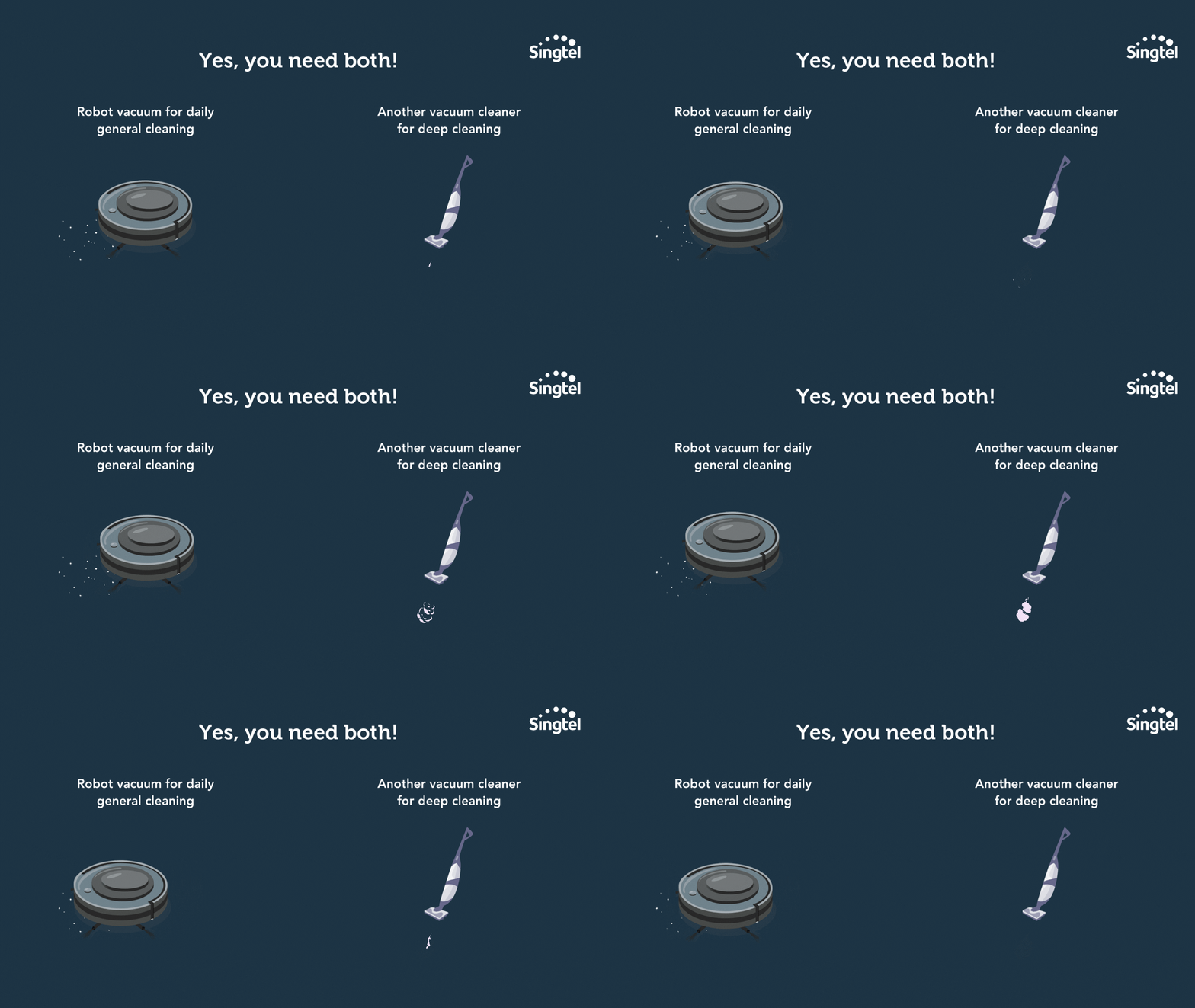
Let’s unpack this a bit.
While robot vacuums are great at general maintenance and cleaning, they are typically less powerful than normal vacuum cleaners and can’t be used for deep-cleaning.
Because of the shape of the robot vacuum, it's also difficult for them to pick up debris from corners.
Even if you’re living in a compact apartment and you don’t need to clean extensively, we would still recommend having a robot vacuum + an additional vacuum for anything that your robot might have missed.
Of course, you can then choose whether you want to get a heavy-duty vacuum (such as an upright vacuum) for your additional vacuum, or whether you want to go with a lightweight, handheld vacuum.
Different types of robot vacuum cleaners in Singapore
Robot vacuum technology has come a long way in the past few years.
Yes, you have your basic models that just pick up dust and debris – but that aside, there are also:
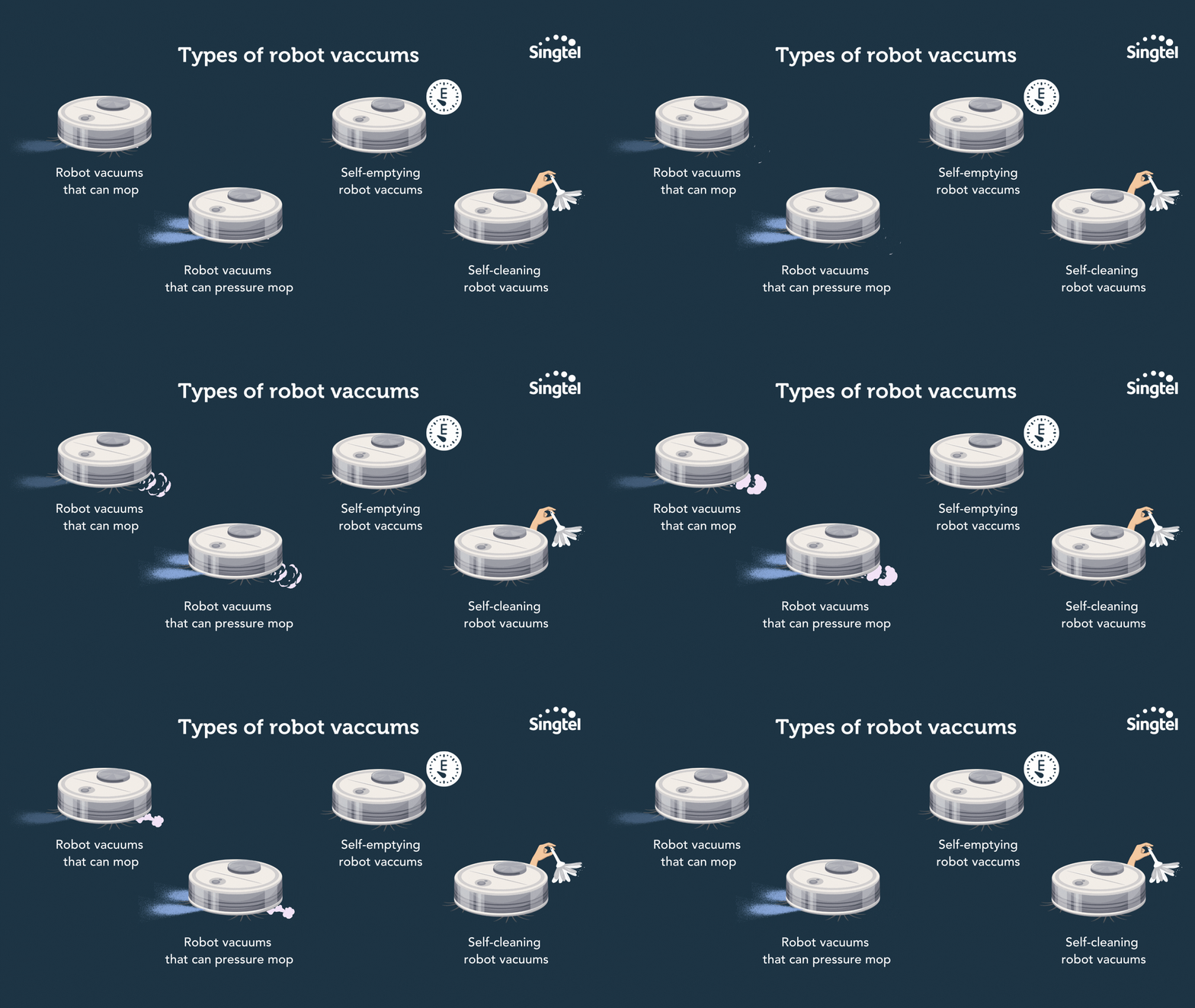
Read on to learn more about each type.
Robot vacuum cleaners that can mop
Firstly, robot vacuums with a mop are designed to vacuum and mop hard floors at the same time.
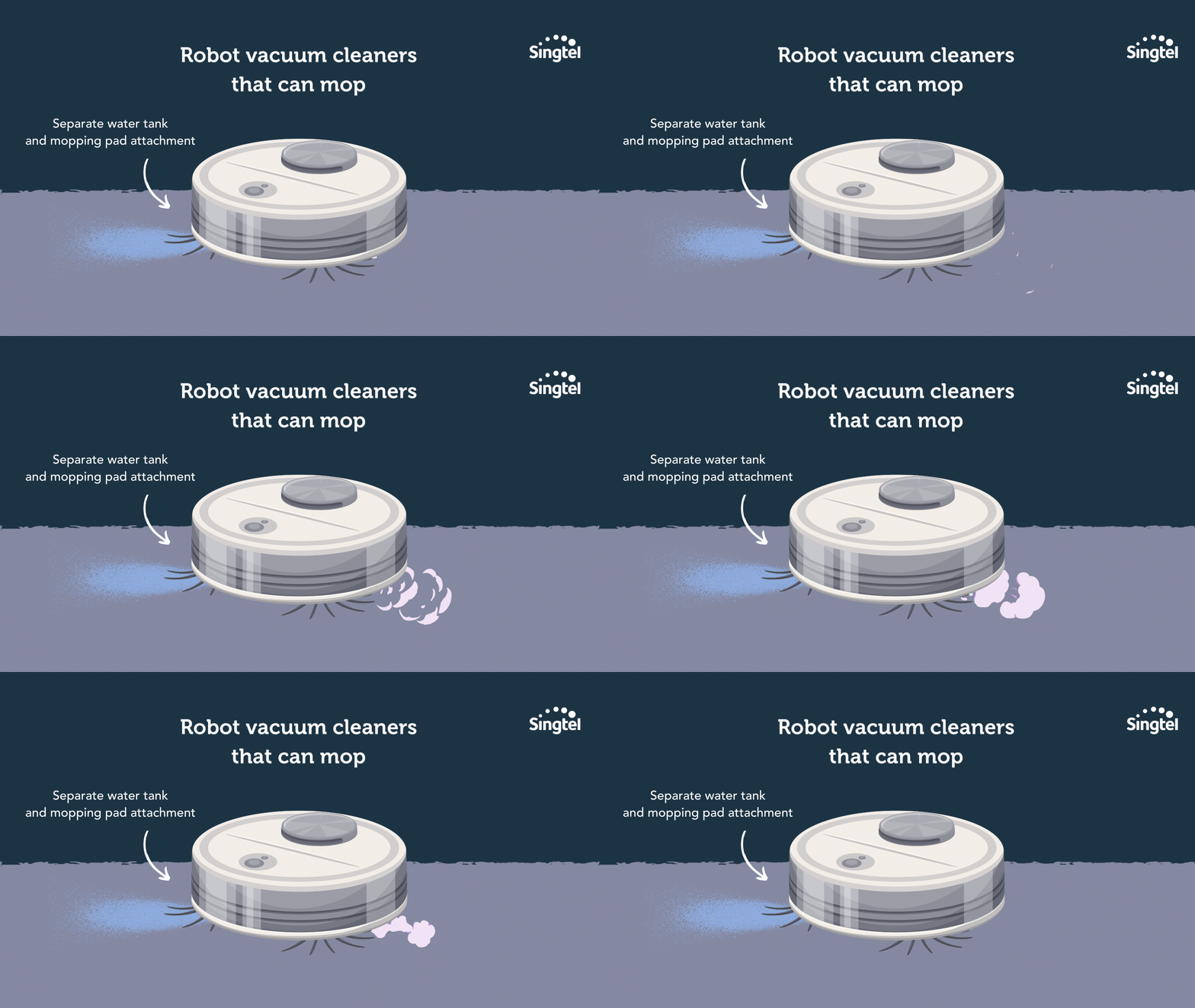
These robots have a separate water tank and mopping pad attachment that is mounted on the bottom of the robot.
Here’s how it works: the mop attachment dispenses water or a cleaning solution onto the pad, and then moves back and forth across the floor to clean and sanitise it.
The appeal of robot vacuums with mops are obvious – if your robot vacuum can do more, why not? 😉
If you’re buying a robot vacuum with a mop, the one thing you’ll need to take note of is the size of the water tank.
A larger water tank can hold more water, which means you won't have to refill it as often. However, a larger water tank can also make the robot vacuum heavier and more difficult to maneuver.
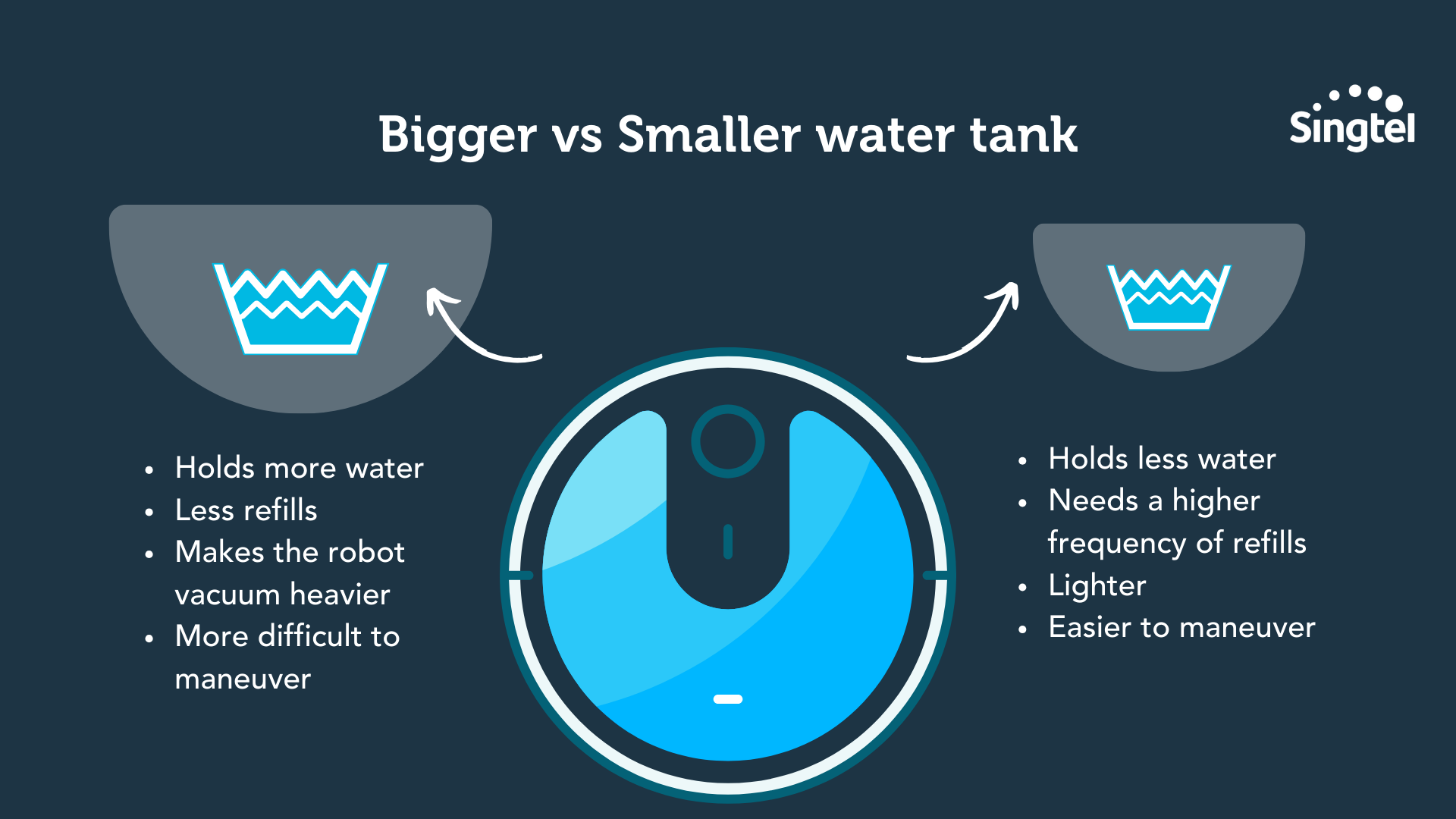
Generally, a 200-300ml water tank is pretty standard.
The Xiaomi Mi Robot Vacuum Mop 2, for example, comes with a 250ml tank, and it can mop 150m2 worth of space without needing a refill.
This is larger than all modern BTO flats – here are the average BTO flat sizes for a benchmark:
3-room BTO flats: 60-68m2
4-room BTO flats: 85-95m2
5-room BTO flats: 107-113m2
Robot vacuums that can pressure mop
Pressure mopping is basically the same thing as mopping, just with more pressure applied.
If you need more thorough cleaning, and you often have spills, coffee stains, etc. on your floors, then you might want to opt for pressure mopping instead of regular mopping.
Self-emptying robot vacuums
Self-emptying robot vacuums are vacuums that automatically empty their dustbins into a large base station.
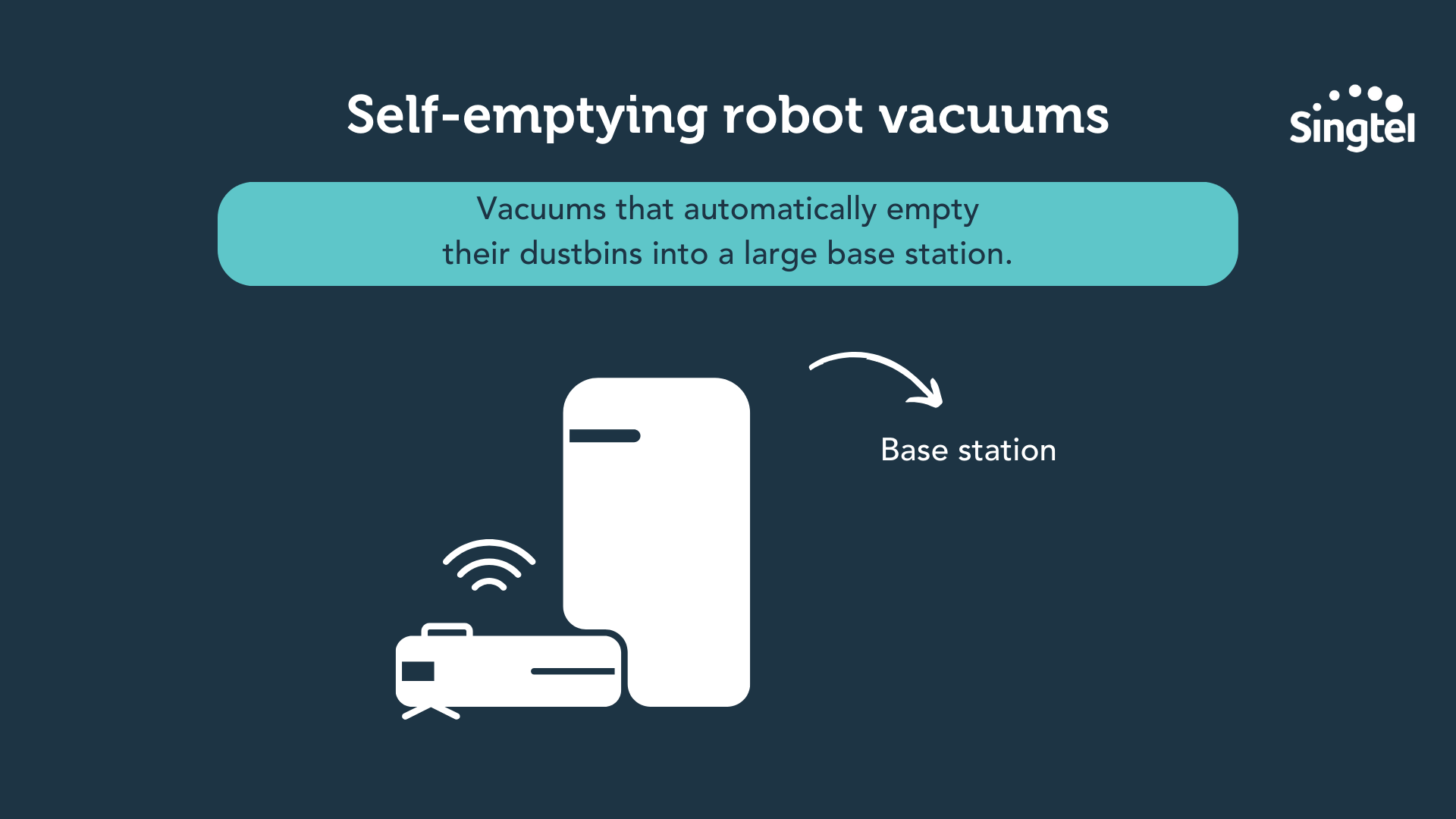
What’s the point of this?
Since the base station is larger than the robot vacuum’s internal dustbin, you can empty the base station less frequently.
Again, the key here is to look at the capacity of the base station – the larger the base station is, the less frequently you’ll have to clear it.
As a very rough estimate, you may need to empty the base station of a self-emptying robot vacuum once every few weeks, as compared to emptying the internal dustbin of a robot vacuum once every few days.
Self-cleaning robot vacuums
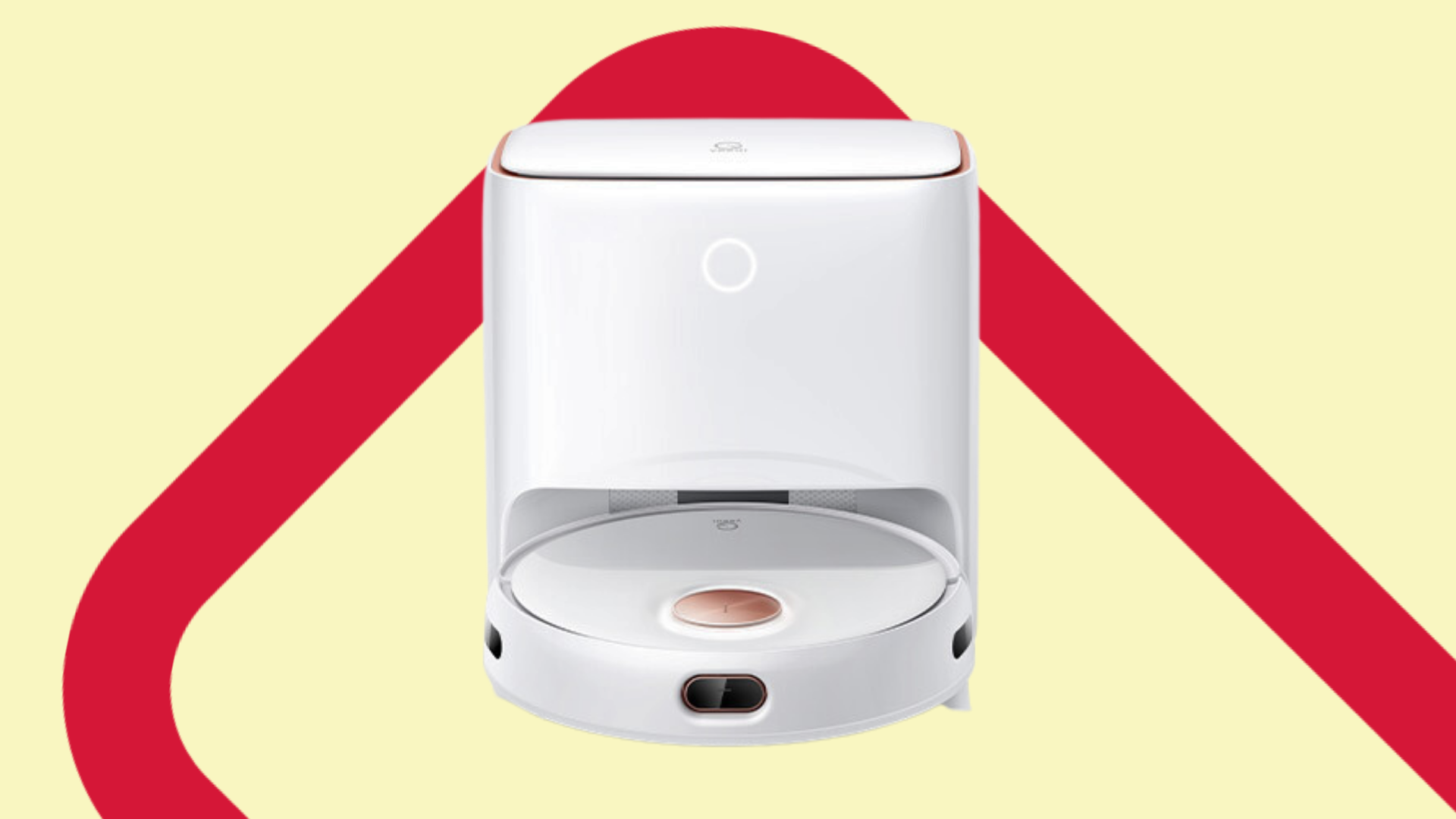
Self-cleaning robot vacuums are pretty new in the market – the one model that comes to mind is Xiaomi's Robot Vacuum X10+.
This is how it works:
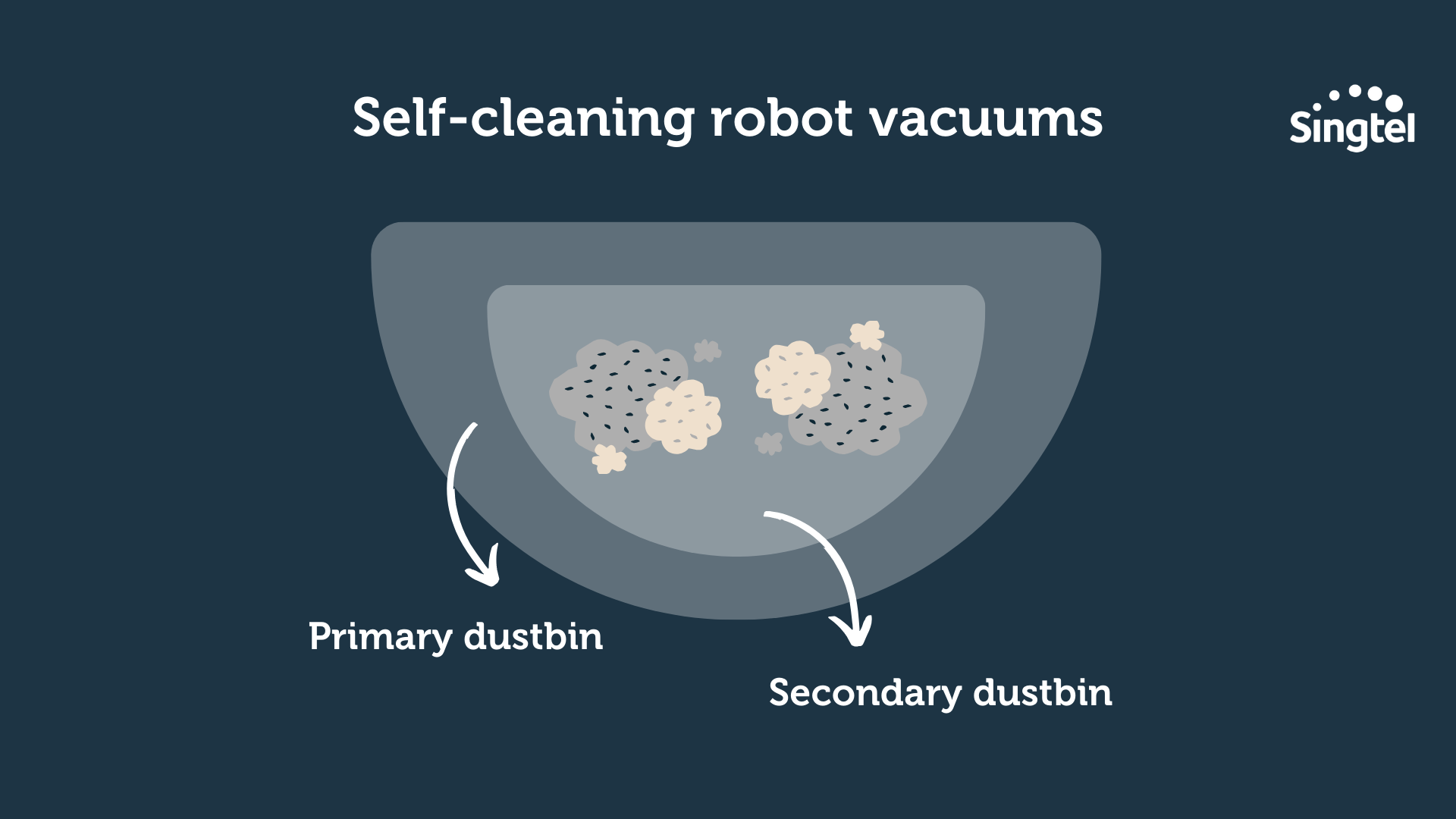
It has two dustbins – a primary one and a secondary one
It uses the secondary dustbin to empty and clean its primary dustbin. When the primary dustbin is full, the robot will dump the contents of the primary dustbin into the secondary dustbin, which has a built-in cleaning system that sanitizes and dries the primary dustbin.
You also don’t need to wash and dry the mops of the robot vacuum – that's taken care of automatically.
All you need to do is fill up the water tank of the base station and empty the waste water tank and dust container from time to time.
Pretty cool, right?
Robot vacuum features to look out for
Now that you’re familiar with the different types of robot vacuums, let’s discuss the features that robot vacuums come with.
We’ll split this into two categories – basic features and advanced features.
Firstly, here are some basic features that pretty much every robot vacuum comes with:
Mapping and navigation
WiFi connectivity, so you can control your robot vacuum using an app
Scheduling, where you can set specific cleaning days/times (eg every night at 7pm)
Virtual walls/boundary markers, where you can set boundaries for your robot vacuum (so it doesn’t enter your toilet, or rooms with delicate objects)
Self-charging, which lets the robot vacuum automatically return to its charging dock when the battery is low
(We won’t discuss these features in detail, since those are common across all robot vacuum models.)
Next, here are some advanced features that not all robot vacuums come with:
Carpet detection: some robot vacuums can detect carpets and adjust their cleaning settings accordingly
Remote monitoring: there are some robot vacuums that come with webcams, so you can monitor your home via a live video feed
Carpet detection
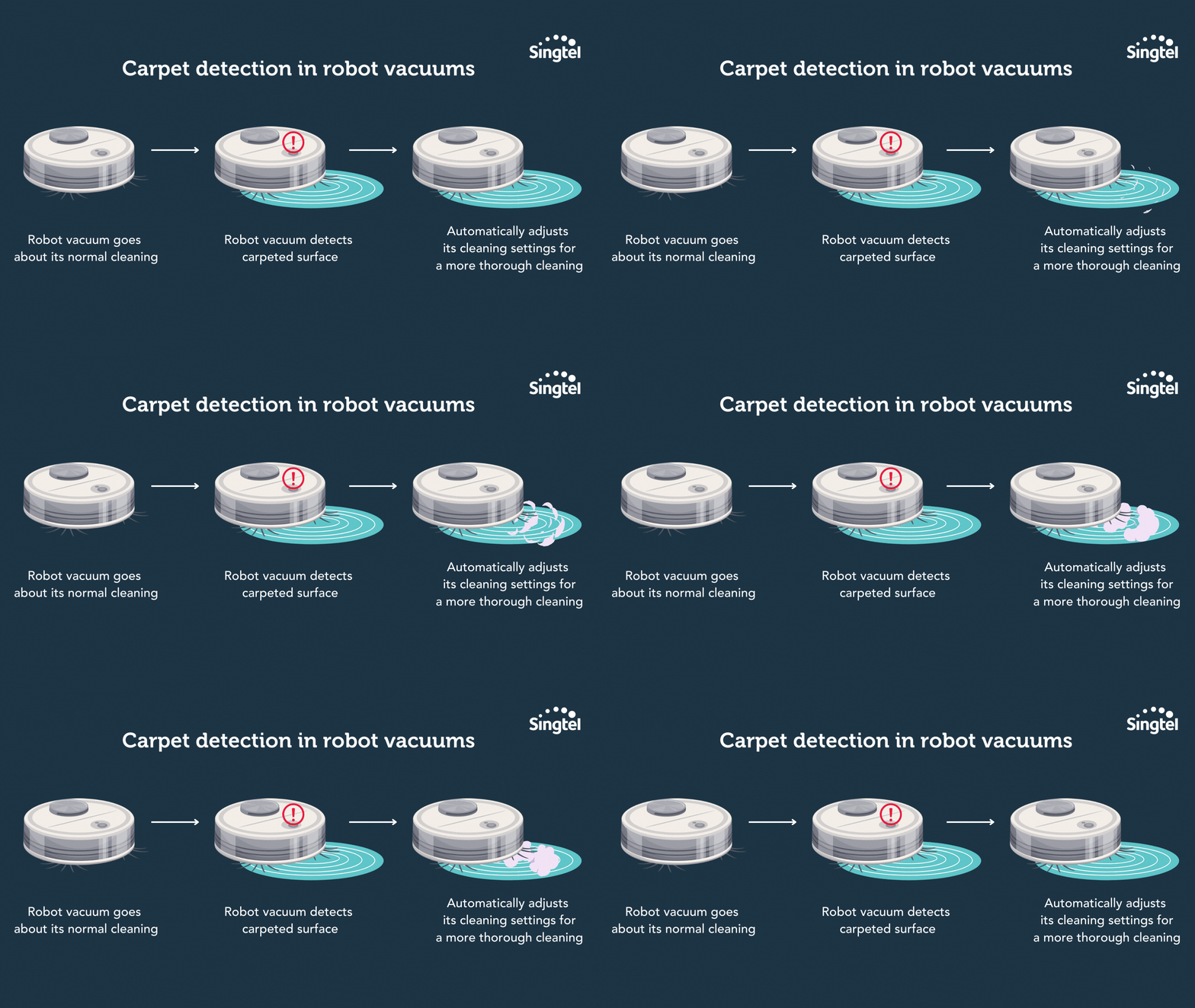
This feature lets your robot vacuum adapt its cleaning settings and optimise performance based on the type of flooring it encounters.
Once the vacuum detects a carpeted surface, it will automatically adjust its cleaning settings to provide a more thorough cleaning.
For example, the vacuum may increase its suction power, or activate a specialised carpet cleaning mode for deep cleaning.
The carpet detection feature also helps robot vacuums optimise energy consumption and cleaning time.
Once the robot vacuum detects that it’s back on hard floor, it’ll automatically reduce its suction and power again, in order to save energy and clean more efficiently.
Mapping and navigation
Before we move on, let’s discuss one last feature – mapping and navigation.
We included this in our list of “basic” features, because all robot vacuums come with mapping technology.
However, while all brands claim to have “advanced” mapping, that’s not really the case. Some models have better mapping technology than others, and it really makes a difference in the quality of the cleaning.
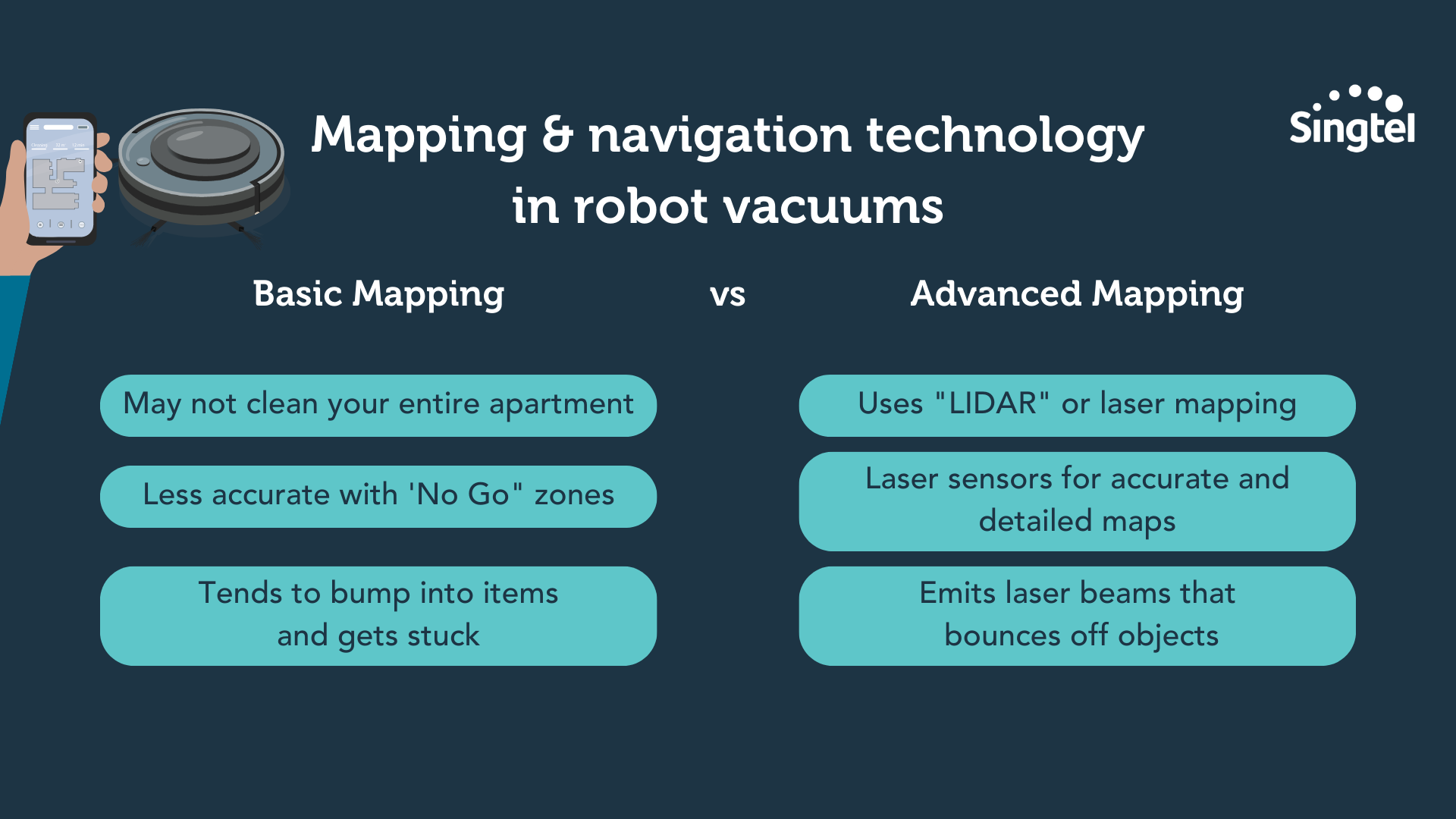
So, how do you tell which robot vacuums DO have good mapping technology?
Simple - look for 'LIDAR' or 'laser' mapping.
This technology uses laser sensors to generate highly accurate and detailed maps of the environment.
The sensors emit laser beams that bounce off objects, allowing the robot vacuum to build a precise map and navigate more effectively.
You would generally expect a high-end or premium robot vacuum to come with laser mapping, as that’s the gold standard.
As for robot vacuums with poor mapping, here’s what you can expect:
They might not clean your entire apartment (it might miss a room or certain spaces within a room)
On the flip side, they might be less accurate with No Go Zones, meaning they’ll still go into spaces that you’ve marked out as areas to avoid
They tend to bump into items (such as furniture legs, cables) and get stuck more often. Depending on how hard the specific spot is to navigate, it may take the robot quite some time to free itself, meaning that it’s using up its battery unnecessarily.
A final word on robot vacuums
It’s amazing to see how far robot vacuums have come in the past 10 years or so.
The OG, first-gen robot vacuums weren’t particularly smart, and would miss certain areas when cleaning your home.
They were also troublesome to clean and maintain, and could only vacuum without mopping.
But if you look at the robot vacuums that are available today, they’re a completely different species.
Today’s robot vacuums have improved mapping using laser technology, and are really thorough when it comes to cleaning.
We also have self-emptying and self-cleaning robots, which makes maintenance a lot easier.
And best of all, today’s robot vacuums can vacuum AND mop. What else could you ask for? 😉
PS: Want to make your robot vacuum purchase more affordable?
With Singtel PayLater, you can pay for your appliances & devices in instalments of between 12 to 36 months.
You can also take a look at the robot vacuums available on Singtel here: