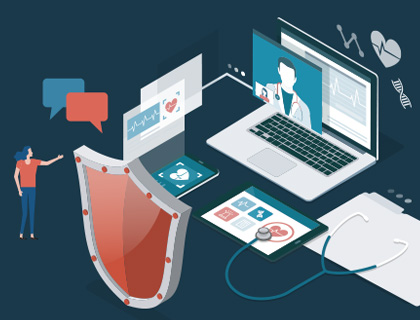
Cyber attacks can put Singapore-based healthcare facilities at risk in more ways than one – under laws like the Personal Data Protection Act (PDPA), companies can be fined up to SGD1 million or 10% of the organisation's annual turnover, whichever is higher, in the event of a breach.2
As IoT and AI become the norm in healthcare facilities, providers are under pressure to build a robust cyber security system, ensuring that sensitive information from both patients and healthcare workers is kept safe and out of reach from attackers.
Some of the most common cyber security threats for the healthcare sector include3:
● Ransomware
● Data theft
● Compromised systems
● Denial-of-service attacks
● Malware
● Cloud threats
● Weaponisation of tools
To address this broad selection of threats, effective cyber security needs to be holistic in its approach.
For example, Singtel offers round-the-clock monitoring, detection, prevention, and solutions provided by a team of trusted experts.
We also regularly update our threat intelligence, ensuring ongoing vigilance against new modus operandi for cyber attacks.
Solutions provided by Singtel to hospitals include:
● Proactive risk management
● Enhancing escalation and response capabilities
● Formulating crisis strategies
These partnerships show that cyber security should not be left to a single IT department or expert – protecting sensitive patient data is a team effort based on robust and round-the-clock cyber security infrastructure and the know-how of trusted and tested experts.
Let’s talk about building a resilient cyber security infrastructure for your healthcare organisation.